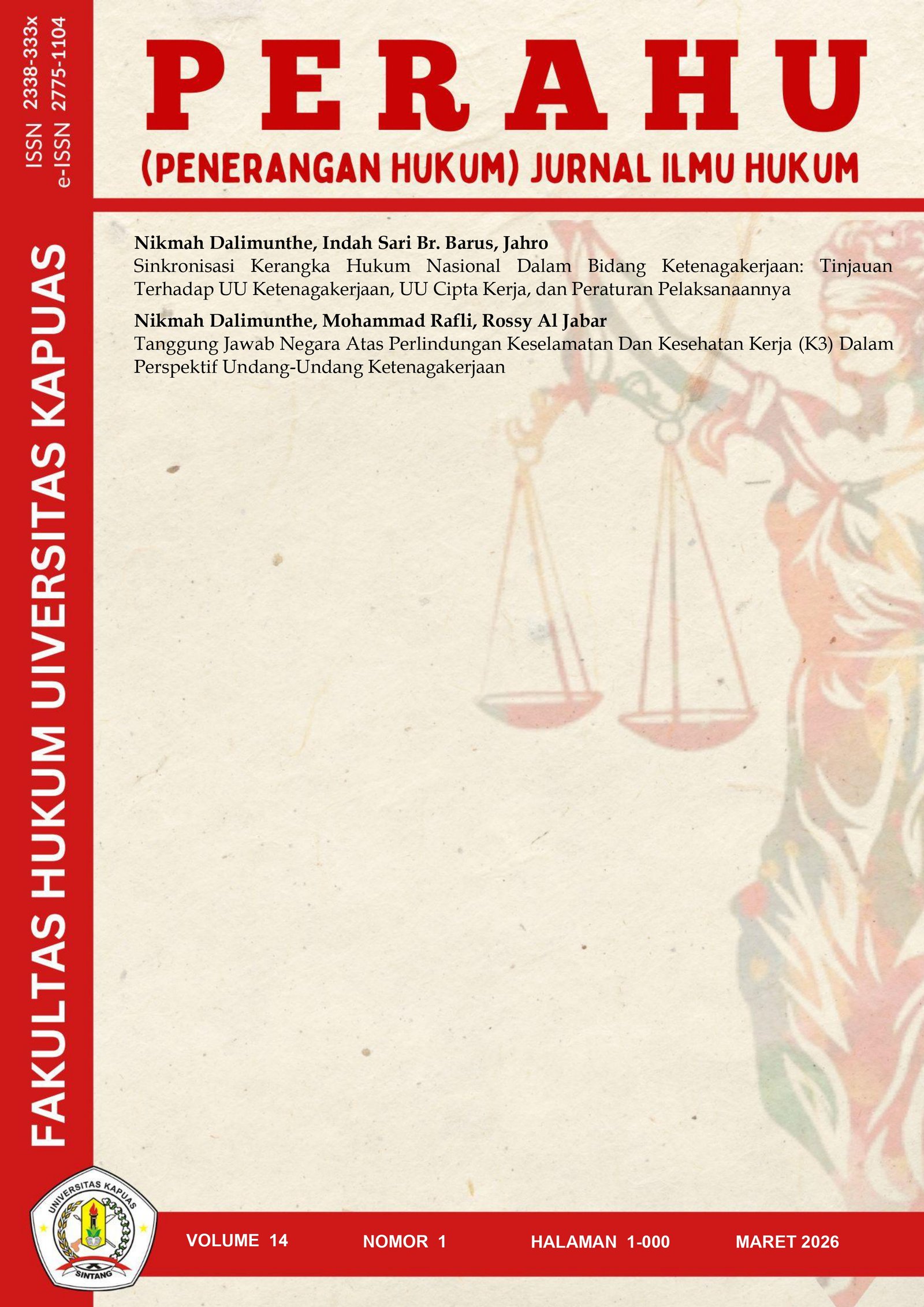
SINKRONISASI KERANGKA HUKUM NASIONAL DALAM BIDANG KETENAGAKERJAAN: TINJAUAN TERHADAP UU KETENAGAKERJAAN, UU CIPTA KERJA, DAN PERATURAN PELAKSANAANNYA
DOI:
https://doi.org/10.51826/perahu.v14i1.1781Keywords:
Legal Synchronization, Labor Law, Job Creation Act, Regulatory Harmonization, Industrial RelationsAbstract
This study aims to analyze the synchronization of the national legal framework in the field of labor by examining the alignment between the Manpower Act, the Job Creation Act, and their implementing regulations. The introduction of the omnibus law brought substantial changes to labor governance, particularly regarding employment relationships, wage systems, contract flexibility, and worker protection. However, these reforms have not been fully accompanied by adequate harmonization at the level of implementing rules, resulting in inconsistencies and potential legal uncertainty. This research employs a normative legal method with statutory and comparative approaches to identify points of divergence, normative conflicts, and their implications for regulatory implementation. The findings indicate that although the Job Creation Act aims to improve regulatory efficiency and the investment climate, significant gaps
remain between the primary legislation and its derivative regulations, especially in terms of worker protection and policy coherence. These results highlight the need for strengthened harmonization through regulatory evaluation, refinement of implementing rules, and alignment of legal norms to ensure a balanced relationship between economic flexibility and labor protection. The study contributes theoretically by mapping regulatory disharmony and offering analytical foundations for policymakers in shaping future labor law reforms in Indonesia.
References
Chairani, M. A., Pradhana, A. P., & Yitawati, K. (2024). Analisis Perlindungan Hukum bagi Pekerja dalam Undang-Undang Cipta Kerja. REC: Research of Economic and Community, 4(2), 45–57.
Fauzan, R. (2022). Implikasi Omnibus Law terhadap Stabilitas Hubungan Industrial di Indonesia. Jurnal Hukum dan Kebijakan Publik, 8(1), 33–47.
Hidayat, A. (2023). Harmonisasi Regulasi Ketenagakerjaan Pasca UU Cipta Kerja: Tinjauan Normatif dan Implementatif. Jurnal Legislasi Indonesia, 20(2), 112–125.
Napitupulu, R. (2022). Ketidakpastian Hukum dalam Pengaturan PKWT setelah UU Cipta Kerja. Jurnal Yuridis, 9(1), 14–29.
Prasetyo, Y. (2023). Evaluasi Perlindungan Pekerja dalam Era Omnibus Law: Analisis Normatif terhadap Regulasi Pasca UU Cipta Kerja. Fairness and Justice Journal, 5(1), 88–99.
Riana, A. (2024). Ketidakpastian Hukum dalam Perjanjian Kerja Waktu Tertentu Pasca UU Nomor 6 Tahun 2023. Juridica: Jurnal Hukum, 12(1), 1–12.
Santoso, B. (2021). Reformasi Ketenagakerjaan dan Tantangan Perlindungan Pekerja dalam Omnibus Law. Jurnal Hukum Sosial, 9(3), 201–214.
Siregar, M. (2020). Kerangka Hukum Nasional dan Problematika Harmonisasi Regulasi Ketenagakerjaan. Jurnal Hukum dan Pembangunan, 50(4), 765–784.
Widodo, S. (2022). Dinamika Hubungan Industrial setelah Berlakunya UU Cipta Kerja: Analisis Terhadap Regulasi Turunan. Jurnal Legalitas, 14(2), 55–70.
Downloads
Published
Issue
Section
Citation Check
License
Copyright (c) 2026 PERAHU (PENERANGAN HUKUM) : JURNAL ILMU HUKUM

This work is licensed under a Creative Commons Attribution 4.0 International License.